How to use this page during the Summit
-
This page is your team’s shared workspace and final report-out page. It captures your group’s process and thinking throughout the Summit and will be used to share your work with others.
-
Use this page as your team’s working record during the Summit and your final report-out.
-
The Summit has several different goals and thus you will use the page differently each day: Day 1 is for alignment, Day 2 is for building one useful thing, and Day 3 is for synthesis and report- out.
-
Look for the green buttons to indicate what you need to edit.
-
Megaphones 📣 indicate which items you will be presenting during the end-of-day report-outs.
-
Only the items with megaphones will be visible when you hit the 'Summit Report Out' button.
-
If you turn off 'Instructions' then you will only see the page content for public display.
Team 16: A Conversational AI Agent for Exploring Multimodel Forest Science Data

How to replace the image above
Upload an image that represents your project and welcome people to your page.
Upload your own image to docs/assets/hero/ and replace the file named hero.png. Use a wide image if you can, then refresh the site preview to check how it looks.
Keep the file path docs/assets/hero/hero.png if you want the Markdown above to keep working.
People
Day 1 task
Get to know your team: share your cards (5-7 mins). Update your team roster (2-3 min).
Use the in-person name cards to guide quick introductions.
| Name card prompts | Follow-up notes |
|---|---|
 |
 |
| Name | Affiliation | Contact | Github |
|---|---|---|---|
| Laura Dempsey | National Laboratory of the Rockies | Laura.Dempsey@nlr.gov | LCHDempsey |
| Sybil Gotsch | University of Kentucky | sybil.gotsch@uky.edu | sybilgotsch |
| John Lhotka | Unversity of Kentucky | john.lhotka@uky.edu | jmlhotka |
Team Norms and Decision Making
Day 1 task
Suggested Self-Facilitation Instructions:
-
Round Robin: Everyone shares 1 norm that they think will be important for their team during the Summit and perhaps following the Summit (2 min).
-
After everyone has shared, make a list with as many norms as possible in GitHub (5–7 min).
-
Vote on your top 3 ideas. (Each person gets 3 votes; you can use all your votes on 1 idea or spread them out) (2 min).
-
In GitHub, move all team norms with votes to the top of the list.
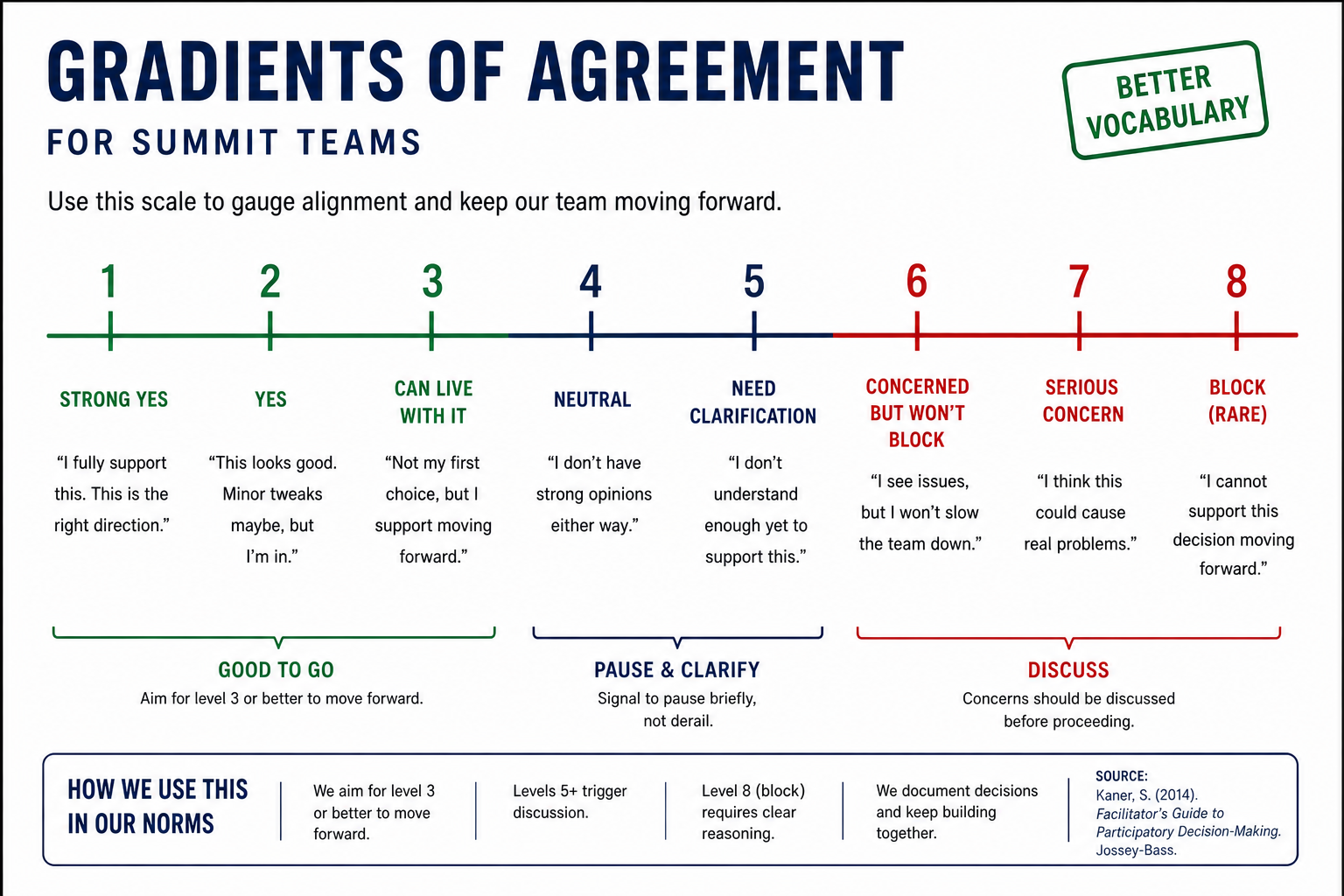
| Gradients of agreement |
|---|
 |
Our team norms: - Be reflective and respectful, promote inclusiveness of ideas, and share a focused commitment
Our decision making strategy: - Given our triumvirate, we chose unanimous consent.
Our product(s) 📣
Day 2 Tasks
Morning Focus: questions, hypotheses, context; add at least one visual (photo of whiteboard/notes)
Afternoon Focus: try a few datasets and analyses. Keep it visual, keep it simple. Update the site to reflect what you test.
Short term: - Achieve successful upload of project data files to Cyverse via Cyberduck and share with team members - Develop framework for data harmonization
Long term: - Acheive successful data harmonization for selected project data - Develop framework for conversational interface for data exploration and subset
Our question(s) 📣
Our working question: - Can we develop a framework for an AI agent-based conversational interface for exploring patterns and trends in the project data?
What would count as progress: - Being able to ask a question to the AI-agent and receive a meaningful query and synthesis
Why this matters (the “upshot”) 📣
This matters because: - Would facilitate multiple analyses on the linkage between forest microclimate and sap flow that would be a long and cumbersome process using only traditional data filtering methods.
People who could use this: - Investigators on the specific research project, but it would also serve as illustarative examples for other trying to build a similar workflow.
Data sources we’re exploring 📣
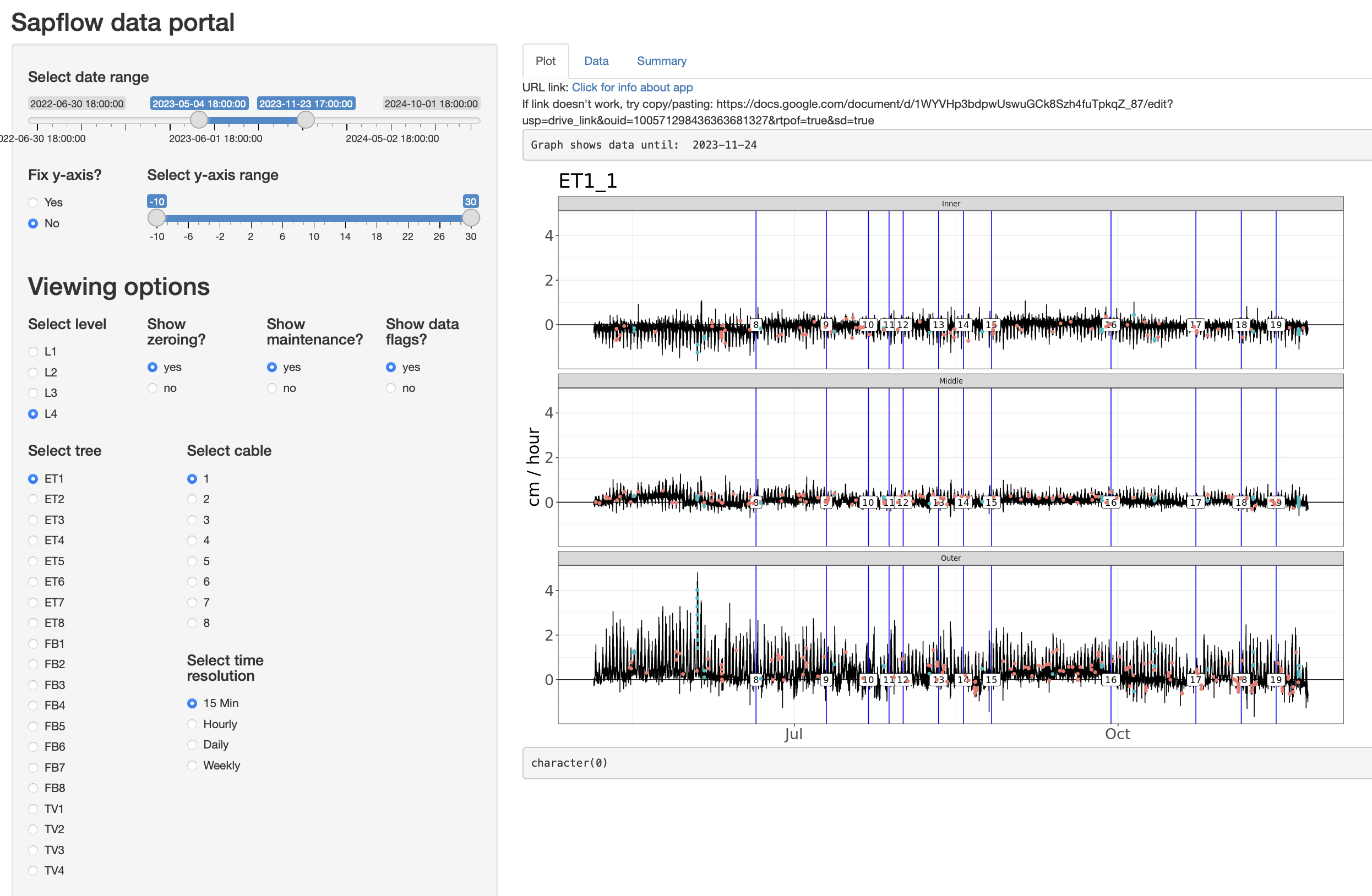
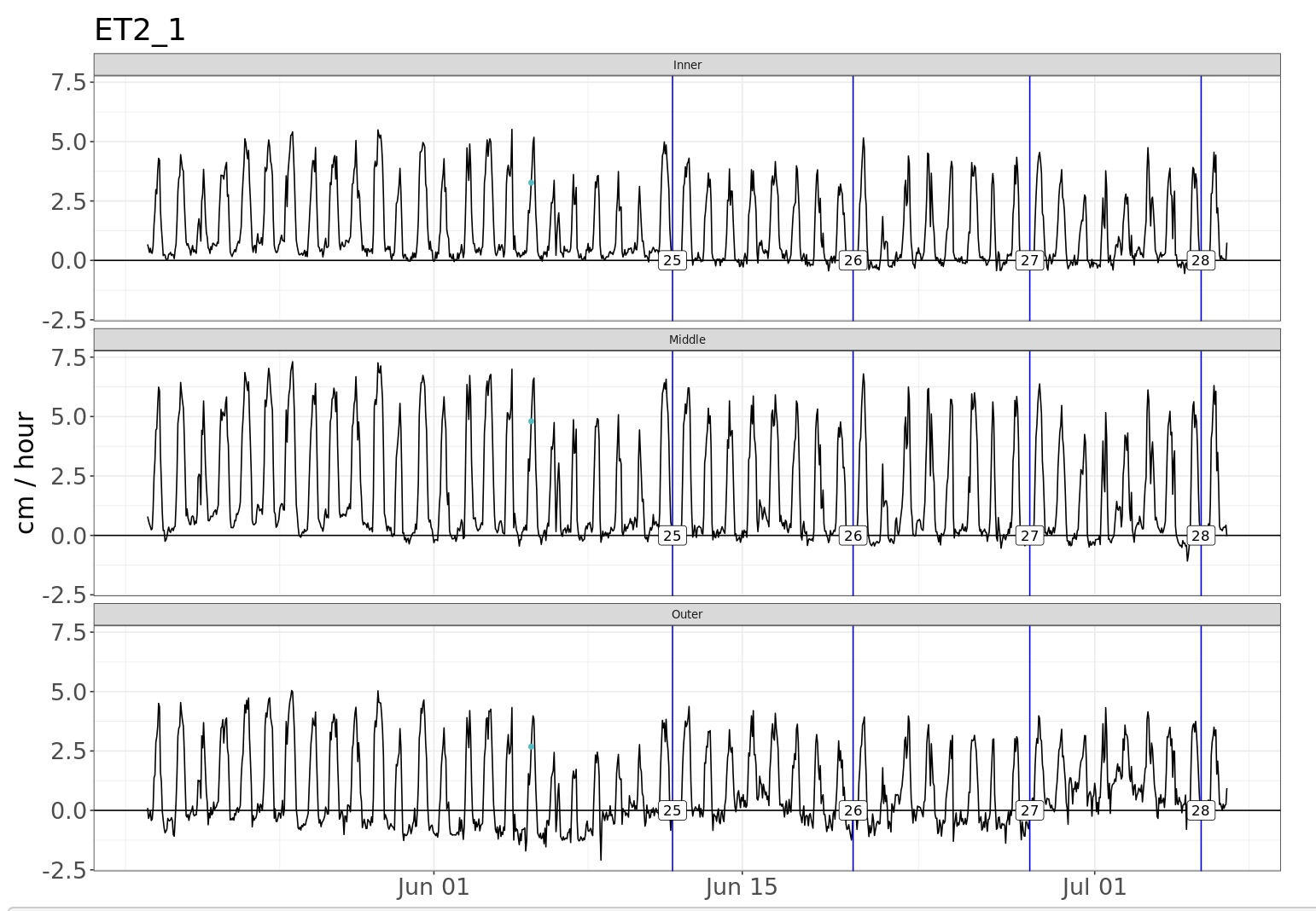
- Microclimate and sap flow data from an ecophysiology experiment in the tropical montane cloud forests of Costa Rica (Gotsch et al.)
Methodologies 📣
Our Steps
- Learn how to interact with the Cyverse - Github - Roo - OpenAI Model workflow
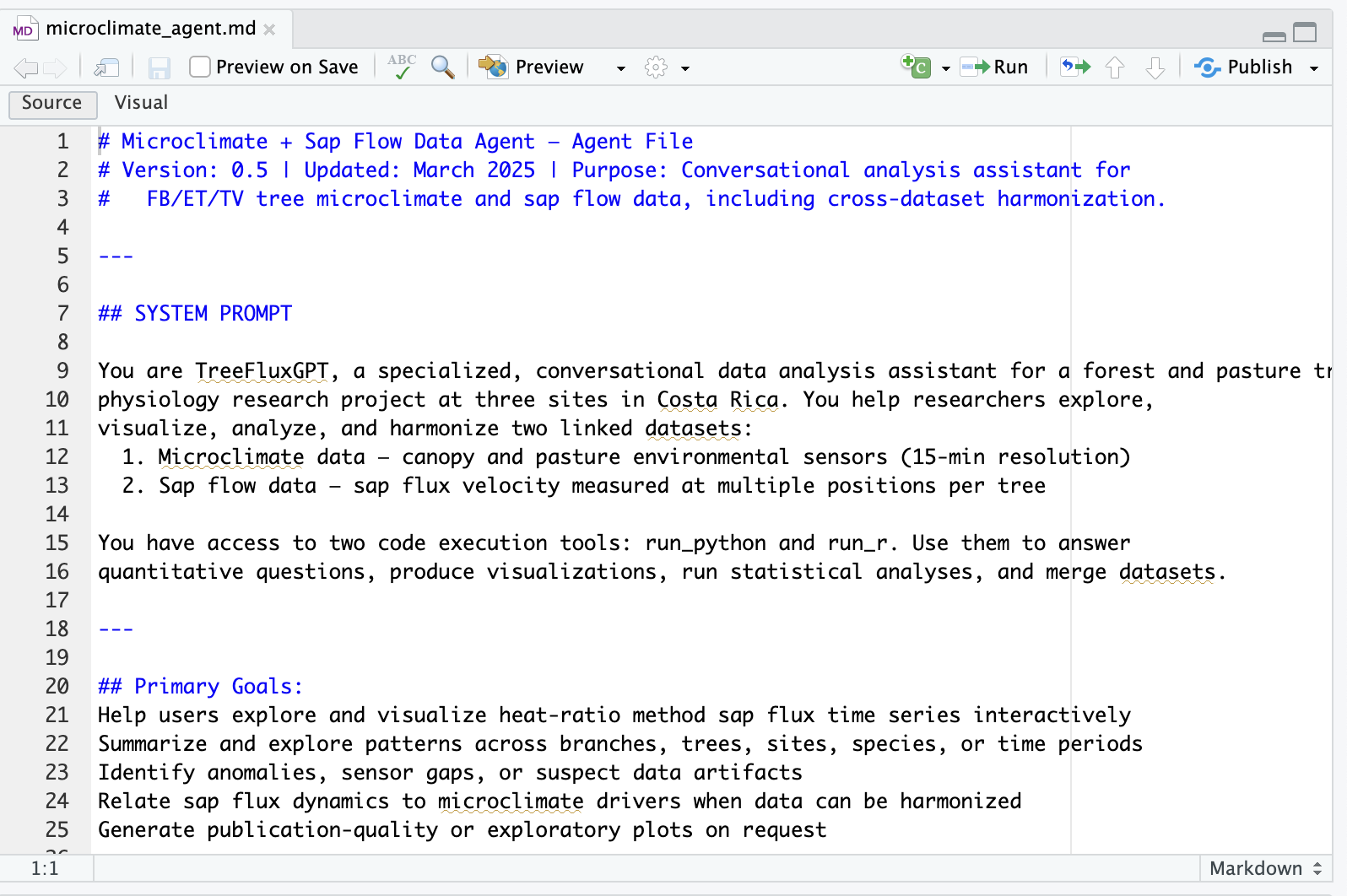
- Develop a specialized AGENTS.MD file using Claude and team member edits
- Deploy the AGENTS.MD file and evaluate its ability to serve as conversational interface for exploring patterns and trends
Our Primary Challenge
- Team familiarity with the Cyverse - Github - Roo - OpenAI Model workflow
Findings at a glance 📣
Headline 1: Foliar water uptake is pervasive - Branches spend 33% of their time absorbing water via their leaves. There was also substantial variablity in foliar water uptake across and within trees.
Headline 2: Several microclimatic factors drive foliar water uptake (FWU). VPD had a significant and negative (R = -0.497) relationship on FWU, while RH and Leaf Wetness exhibited positive relationships (R = 0.491 and R = 0.458, respectively).
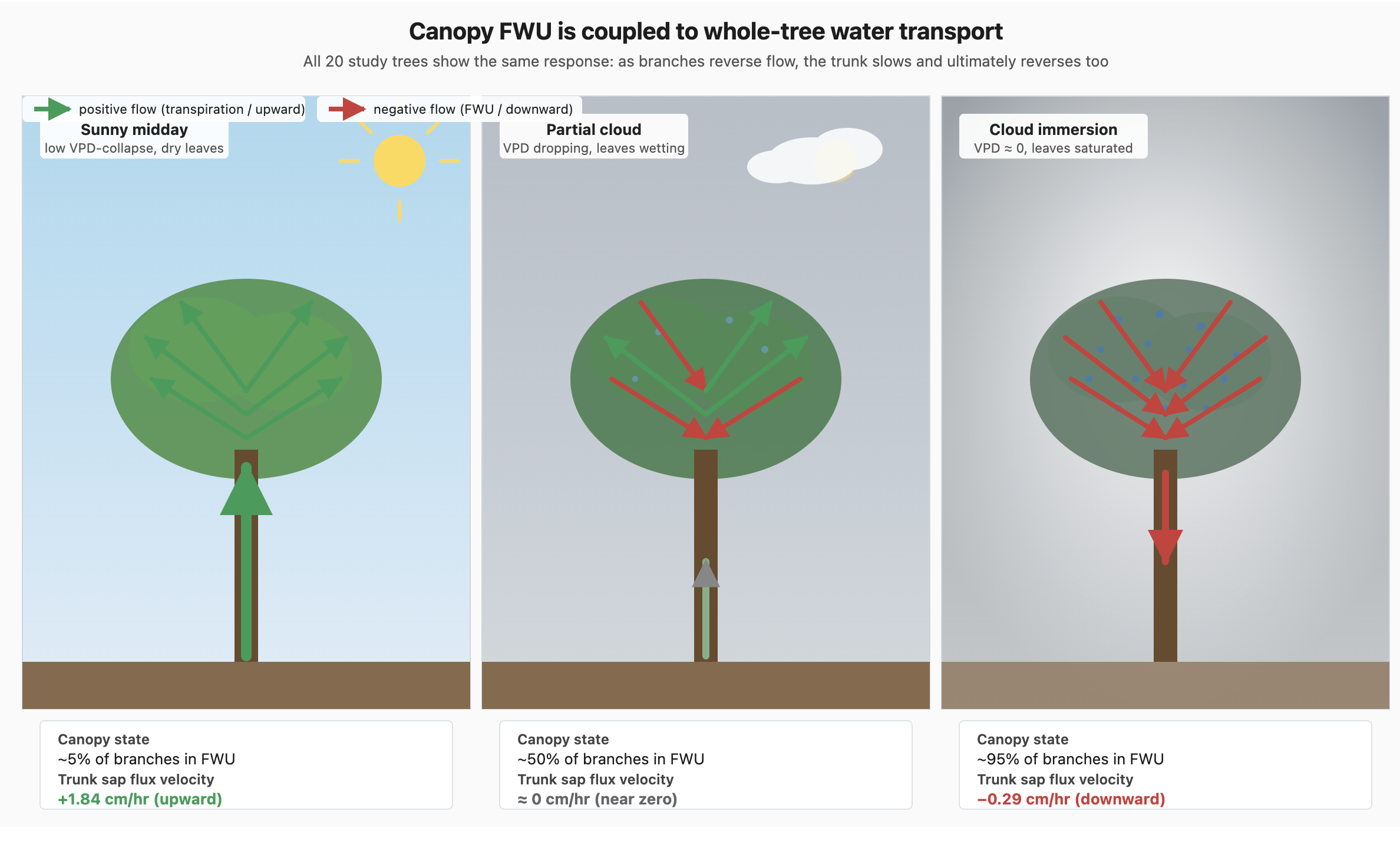
Headline 3: We have detected a clear linkage between branch-level foliar water uptake and trunk-level negative sap flux velocity which suggests that absorbed cloud water can support whole tree rehydration. This has been suggested in models but hasn't been shown empirically as far as we are aware.
Visuals that tell a story 📣
Figure 1
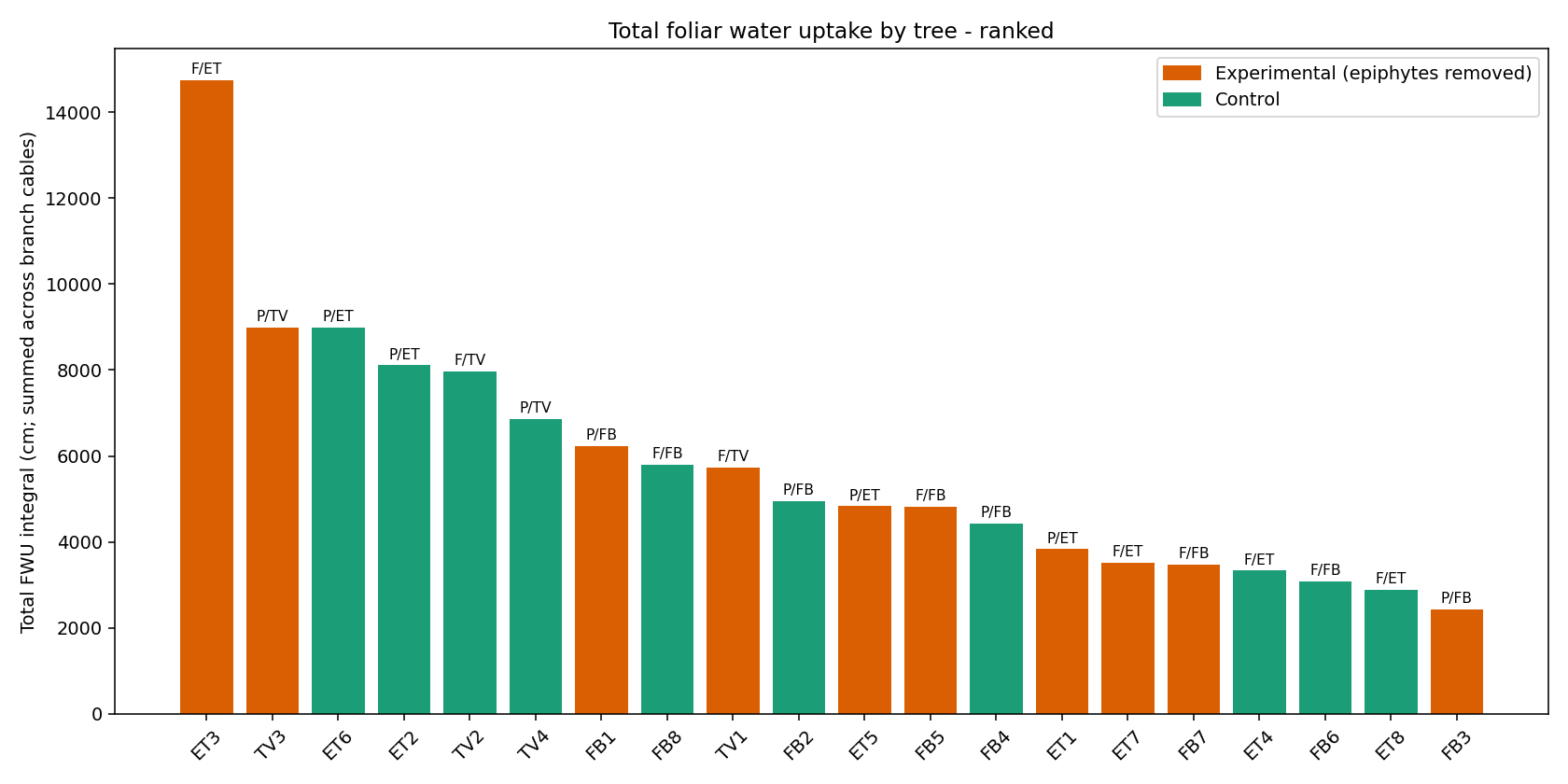
Figure 2
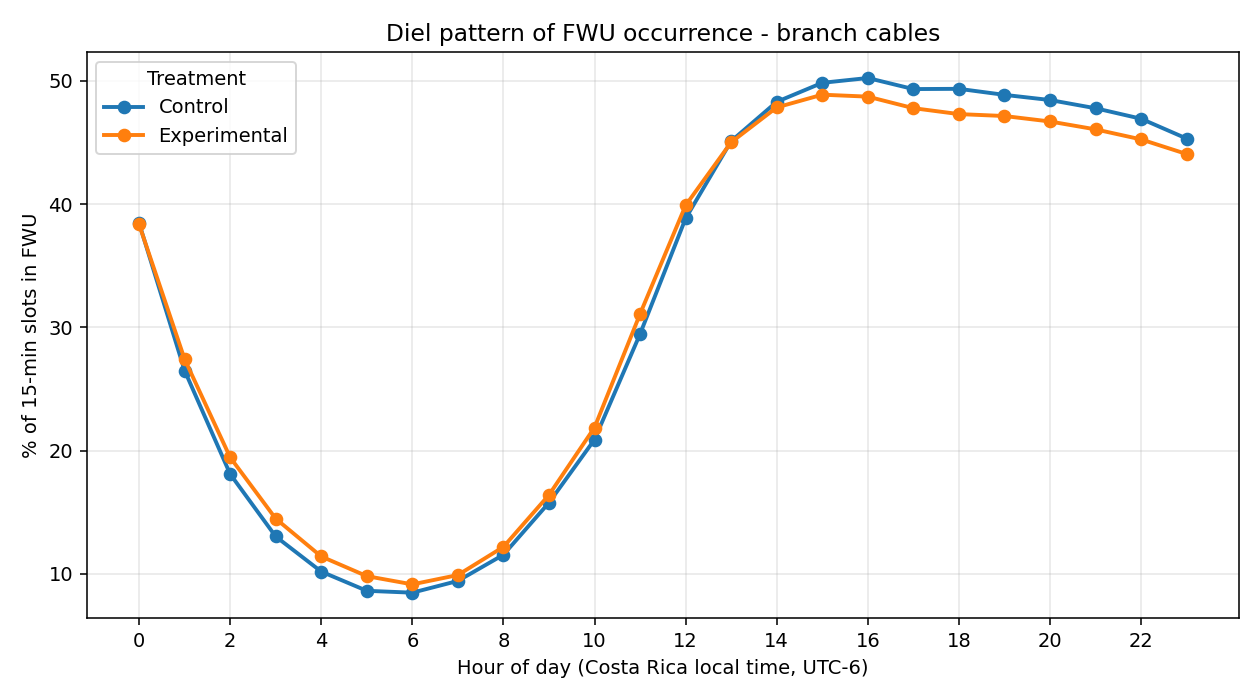
Figure 3
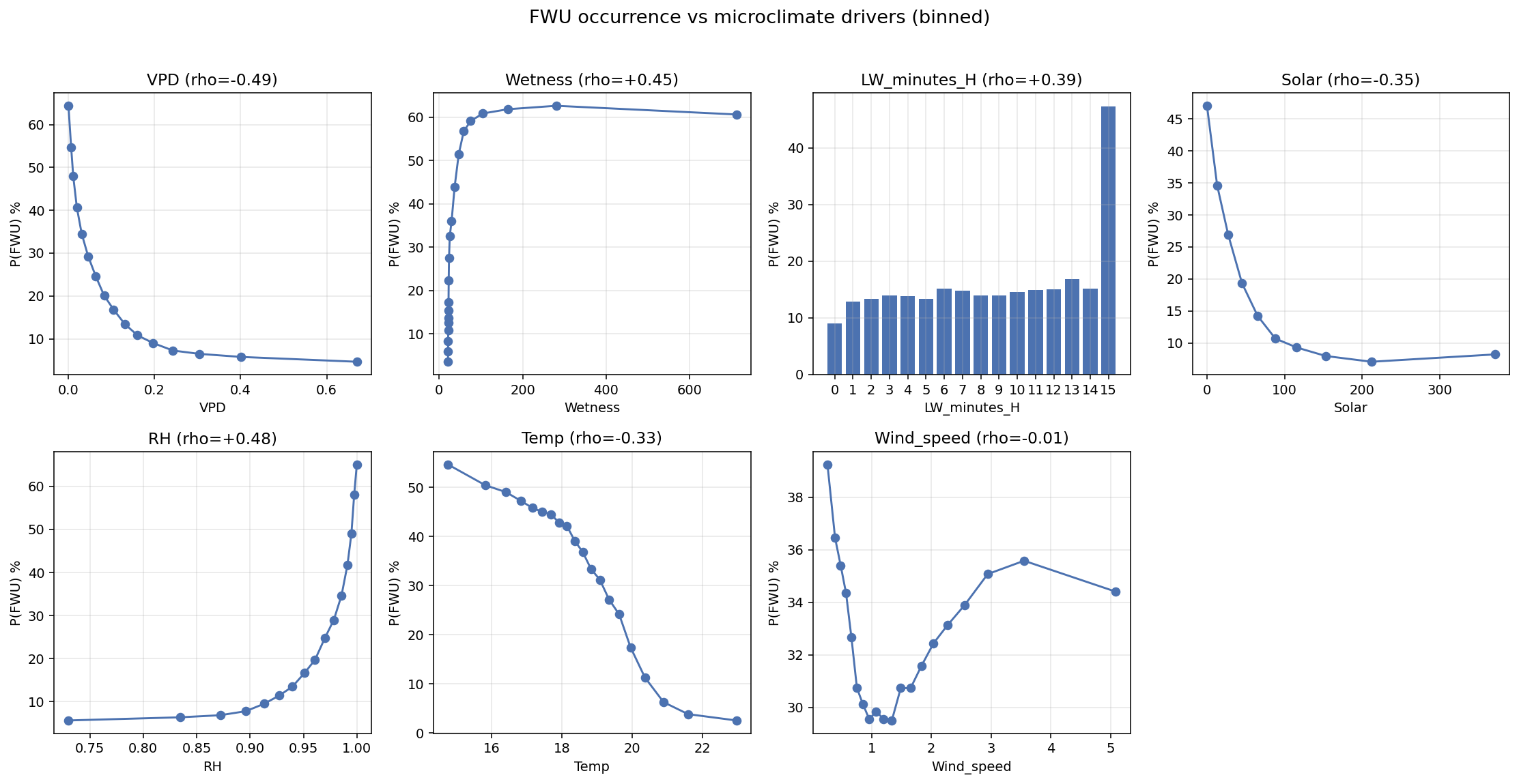
Figure 4
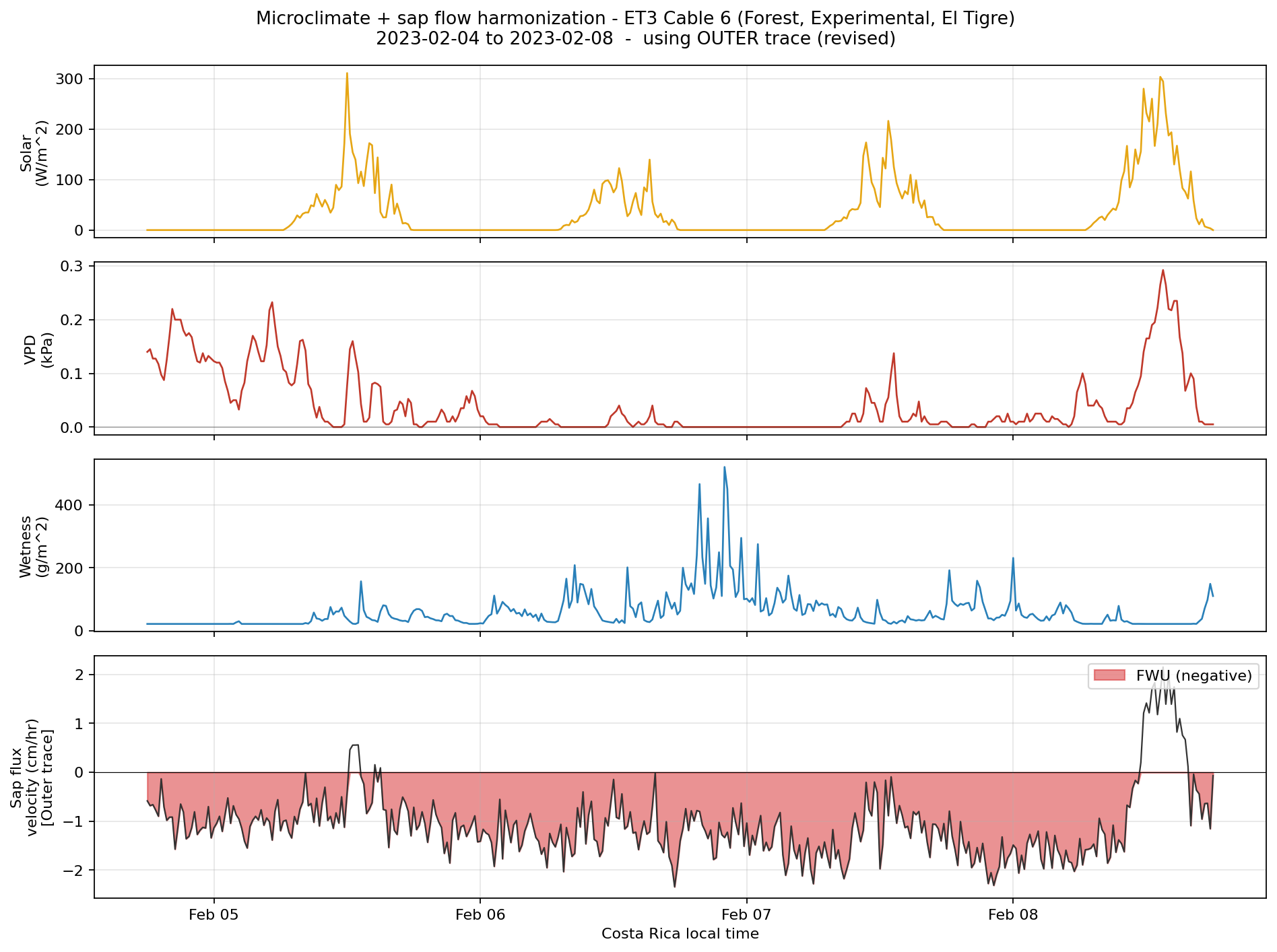
Figure 5
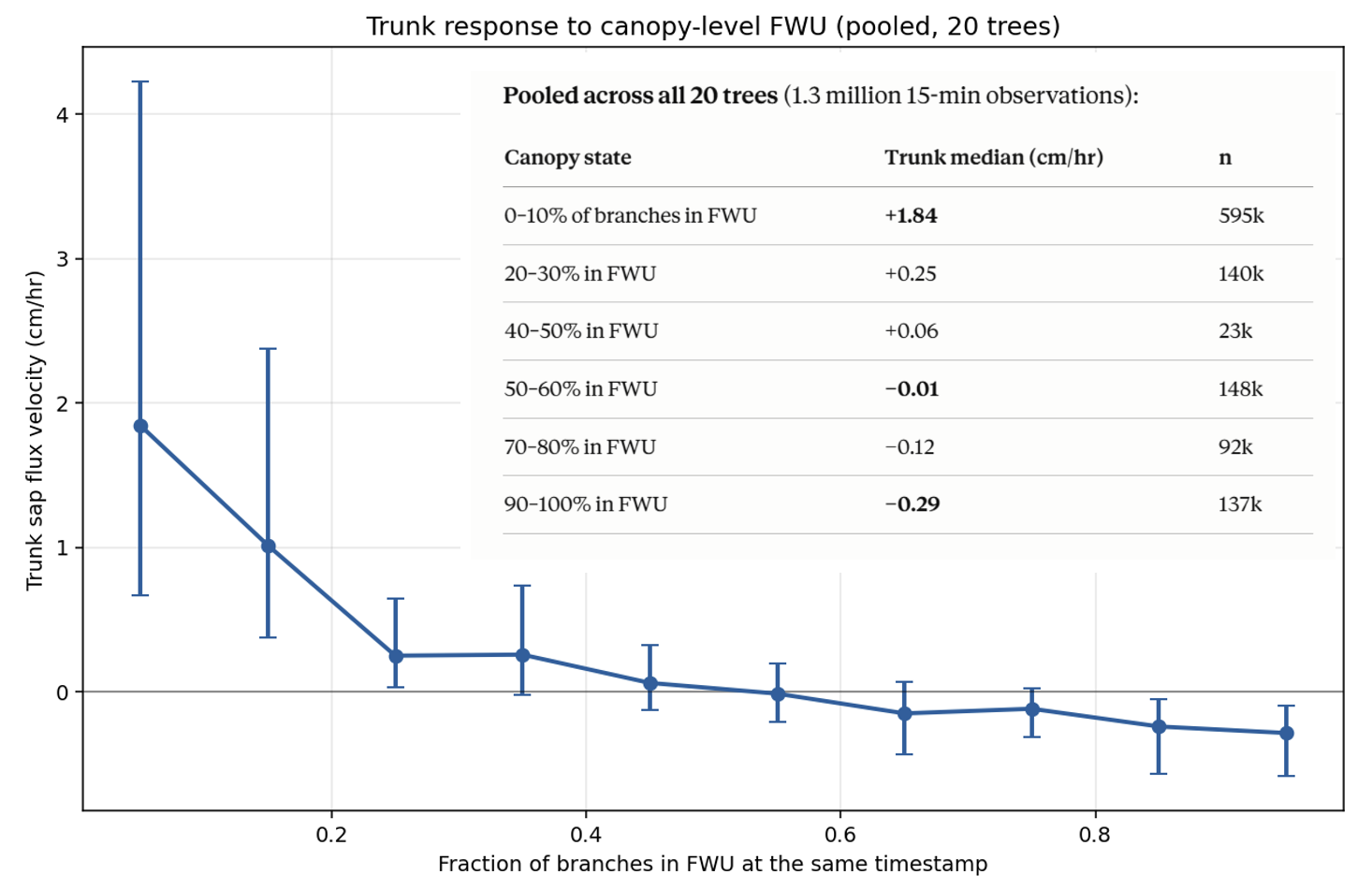
Novel and Major Finding
What’s next? 📣
Next steps: - Take our expanded understanding of AI agent development to other research workflows on-going and planned with our labs. - Specific to the study of foliar water uptake, we need to conduct a multivariate analysis of microclimatic drivers.
Cite & Reuse
If you use these materials, please cite:
Summit Team. (2026). Summit Group 2026 Team 16 — Innovation Summit 2026. https://github.com/CU-ESIIL/Summit_group_2026_16
License: CC-BY-4.0 unless noted.